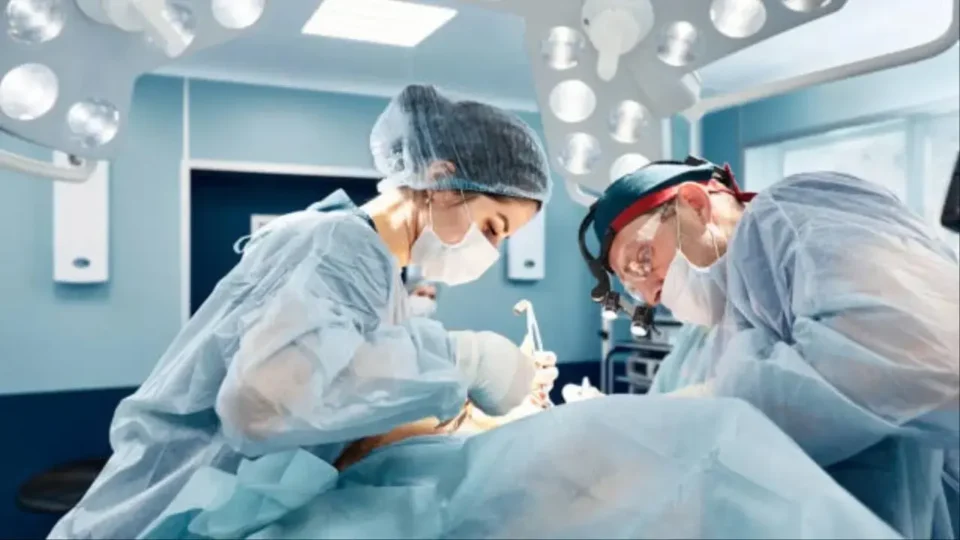
In a significant advancement for knee preservation surgery in India, Mumbai doctors have successfully performed a meniscus allograft transplant using a graft that was donated, processed, and implanted entirely within the same institution.
The surgery at Jaslok Hospital was performed on a 21-year-old engineering student who had lost his meniscus following a sports injury. Despite undergoing multiple procedures earlier, he continued to experience disabling pain that affected both his mobility and long-term joint health. The patient also worked as a part-time sportsman to support his livelihood, and over time even routine walking had become difficult before he arrived at Jaslok for treatment.
The procedure was performed by a surgical team led by Dr Prasad Bhagunde, consultant Orthopaedics & Sports Medicine Expert. The anaesthesia for the surgery was supported by Dr Rajani M R, Consultant Anaesthesiology. It marks an important step for knee preservation surgery in India and shows that institutions in the country can manage the full pathway of tissue donation, preservation, and transplantation.
The meniscus acts as a vital shock absorber within the knee joint. When it is completely removed due to injury or repeated surgeries, patients often develop persistent pain, swelling, and an increased risk of early arthritis. Younger and physically active individuals are particularly affected as the loss of this structure can severely limit mobility. The meniscus does not regenerate once it is fully lost, and there is currently no artificial implant that can restore its natural biomechanics. For carefully selected patients without advanced arthritis, transplantation using donated biological tissue remains the only treatment that can recreate near-normal joint function.
In this case, the meniscus graft was donated at Jaslok Hospital and later used for transplantation into a patient at the same institution. Such a complete local donation and transplant cycle remains uncommon and illustrates how tissue donation within the country can directly support patients requiring complex joint preservation procedures.
Using this donor graft, surgeons at the hospital performed the transplant through a minimally invasive arthroscopic approach. A carefully sized meniscus was implanted to restore the knee’s natural cushioning and stability, with the objective of improving joint function and allowing the patient to regain mobility.
Speaking about the surgery, Dr Bhagunde, said, “In meniscus transplantation the real challenge is ensuring that the graft behaves like the patient’s original tissue once it is implanted. Even small differences in size or positioning can affect how the knee distributes load during movement. In this case we spent considerable time planning the graft match and surgical placement so that the joint could regain its natural cushioning and stability, which is essential for a young and active patient.”
Historically, meniscus allografts used in such procedures were largely imported from the United States, often leading to challenges in size compatibility, as patients in Asian populations typically have smaller knee anatomy. Cost has also been a significant barrier, with imported grafts priced at around Rs 14 lakh, limiting access for many patients. However, the availability of locally processed grafts is transforming this landscape. These grafts are now available at approximately Rs 1.5 lakh, significantly reducing the financial burden and making the procedure more accessible, while also offering a better anatomical fit for Indian patients.
Dr Milind Khadke, Director Medical Services, Jaslok Hospital and Research Centre, said, “For many years, procedures that depended on specialised biological grafts remained difficult to scale in India because the ecosystem around tissue donation and preservation was still evolving. Cases like this signal that the gap is beginning to close. When institutions are able to support the entire pathway locally, it changes what doctors can realistically offer patients. The real significance lies in building that capability within the country rather than relying on solutions from elsewhere.”
Mumbai docs give hope to man who lost meniscus due to injury with timely surgery