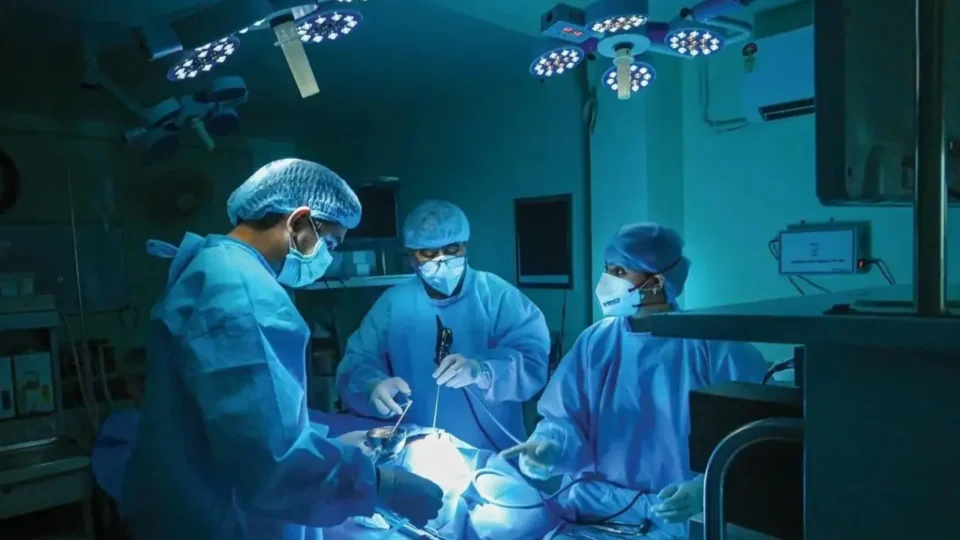
Doctors in Pune have successfully saved the life of a girl who was suffering from fever for 10 days, after they discovered it was a rare and life-threatening disorder.
The 10-year-old girl from Pune was diagnosed with Macrophage Activation Syndrome (MAS), a rare and potentially life-threatening complication of systemic juvenile idiopathic arthritis (sJIA), after a 10-day episode of persistent, recurring high-grade fever failed to settle despite initial treatment. It initially appeared to the family to be a routine childhood fever was managed elsewhere with medical care, and they understandably waited in the hope that it would settle.
However, when the fever persisted for nearly 10 days despite treatment, with recurrent spikes above 101°F every 6–8 hours, the child developed ankle pain, a skin rash, extreme tiredness, swollen glands in her neck, and an enlarged liver. Further investigations at Motherhood Hospital, Pune, revealed severely elevated ferritin, falling blood counts, and raised liver enzymes, prompting doctors to investigate beyond a routine infection.
Finding the cause
A team led by Dr. Amar Bhise, Consultant – PICU (Paediatric Intensive Care Unit), Neonatology and Paediatrics at Motherhood Hospitals in Lullanagar and Kharadi, carried out detailed investigations to determine the cause of her persistent illness. The results pointed towards Macrophage Activation Syndrome (MAS), a rare and potentially life-threatening condition in which the immune system becomes excessively activated and starts affecting the body’s own tissues and organs.
Dr Bhise said, “On arrival at the hospital, the girl had persistent high-grade fever along with ankle pain, a skin rash, extreme tiredness, swollen glands in her neck and an enlarged liver. Her blood investigations provided crucial clues. She had an extremely high ferritin level of more than 5,000, low counts of all three major blood cell types, and raised liver enzymes, with SGOT/AST and SGPT/ALT levels above 200 U/L. The combination of persistent fever, falling blood counts, liver involvement, and severe inflammation raised concern that her immune system was becoming excessively activated.”
Doctors ruled out infections and investigated other possible immune and blood disorders. A bone marrow test was also performed to look for conditions such as leukemia or lymphoma, but these were not found. The overall clinical picture and investigation findings ultimately pointed towards MAS. The underlying condition was subsequently identified as systemic juvenile idiopathic arthritis (sJIA), a rare inflammatory condition in children that can cause fever, rash and joint symptoms. MAS is a serious complication of sJIA and can progress rapidly if it is not recognized and treated promptly.
Dr. Bhise added, “MAS can occur as a complication of underlying inflammatory or autoimmune diseases and is most commonly associated with systemic juvenile idiopathic arthritis in children. In this case, the combination of persistent fever, falling blood counts, very high ferritin, liver involvement, and severe inflammation helped us recognise that the immune system was becoming excessively activated. Early suspicion is extremely important because MAS can progress rapidly and affect multiple organs.”
Published studies suggest that clinically apparent MAS occurs in approximately 10–25 per cent of children with sJIA, although reported rates vary depending on the diagnostic criteria and population studied. Once MAS was suspected, the girl was admitted to the Paediatric Intensive Care Unit (PICU) for close monitoring and treatment, in consultation with a specialist in childhood arthritis.
She was started on high-dose steroids in the ICU to control the excessive immune and inflammatory response. As her condition improved, the steroid dose was gradually reduced over the following six to eight weeks. Her blood counts and markers of inflammation were monitored during treatment to ensure that the inflammation was settling. Her fever gradually settled, while her blood investigations improved and returned towards normal over the following weeks. She was under follow-up for about two months and is now doing well, with no evidence of recurrence of the inflammation.
It is necessary to look beyond common infections when a child’s fever persists and is accompanied by unusual symptoms. Parents should seek immediate help when fever continues despite treatment, particularly when it is linked with joint pain, an unusual rash, extreme tiredness, stomach pain, vomiting, bleeding, seizures, sudden deterioration, or abnormal blood test results. Repeated high fever spikes over several days, falling blood counts, or other abnormal investigations should not be managed with repeated medication without reassessment. Early identification of serious inflammatory conditions such as MAS can be critical in preventing rapid progression and organ complications.
The patient’s family thanked the doctor for prompt intervention and are happy that the child is now feeling better.
“This case demonstrated how important it is to reassess a child when persistent fever is accompanied by symptoms that do not fit a routine infection. Recognising the pattern of symptoms and abnormal investigations helped us identify the underlying inflammatory condition and initiate treatment at the right time,” Dr Bhise concluded.
Pune docs save 10-year-old girl from rare and life-threatening immune disorder