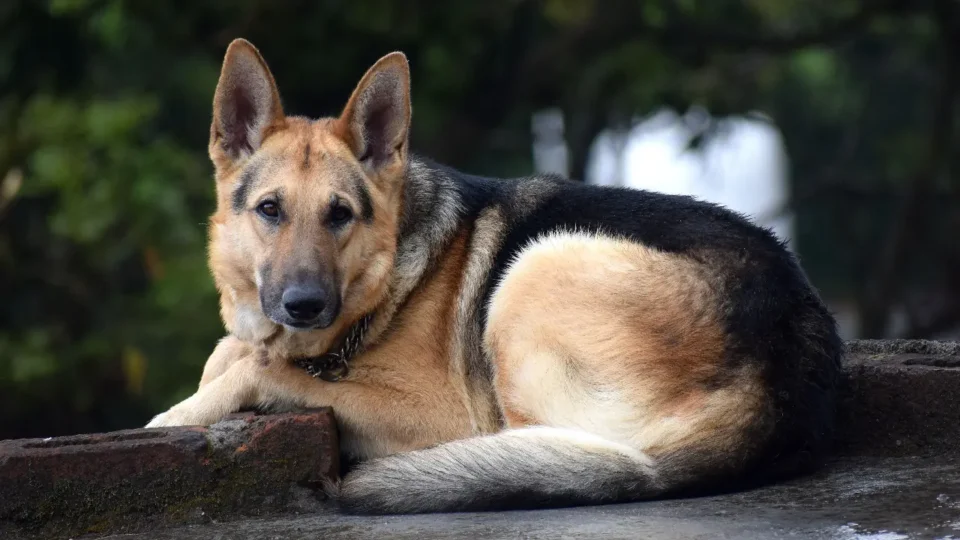
In a rare and remarkable veterinary intervention, Rover, a seven-year-old German Shepherd from Jabalpur, has returned home with a new lease of life after undergoing life-saving surgery by doctors in Pune.
The Retrograde Intrarenal Surgery (RIRS) at Pune Small Animal Clinic was conducted by Dr. Narendra Pardeshi and his team on the dog, who was battling chronic renal failure and had been referred to Pune for hemodialysis. The animal was found to have stones in his kidneys and urinary bladder contributing to his deteriorating condition.
Instead of conventional treatment alone, Dr Pardeshi and his team successfully used the highly specialised, minimally invasive RIRS technique to treat the kidney stones, which is a rare and first-of-its-kind procedure in veterinary care for a dog.
Rover was brought to Pune in a critical condition. Instead of immediately proceeding with hemodialysis, Dr. Pardeshi and his team carried out detailed investigations to understand the underlying cause of his deteriorating kidney function. The examinations revealed stones in his kidneys and urinary bladder, which were contributing to his renal condition. After first stabilising Rover, the team decided to perform Retrograde Intrarenal Surgery (RIRS), an advanced minimally invasive procedure to treat the kidney stones without conventional open surgery.
Urinary stones, medically known as urolithiasis, are a recognised health problem among dogs. Stones can develop in different parts of the urinary system, including the bladder and kidneys. Kidney stones become particularly concerning when they affect the normal functioning of the kidneys or obstruct the urinary system. In Rover’s case, the situation was challenging as he was already suffering from renal failure by the time he reached Pune.
In simple terms, RIRS allows the veterinarian to reach the kidney through the natural urinary passage using a very thin, flexible scope fitted with a camera. Once the kidney stone is located, a microscopic laser fibre is passed through the scope to break the stone into fine dust or very small fragments. This helps treat the stone without the large surgical incision required in conventional open surgery.
Explaining Rover’s condition and the challenges involved in treating him, Dr Pardeshi said, “Rover came to us in a critical condition after being referred for hemodialysis. His creatinine was 13.79 and urea was 123.9, which indicated severely compromised kidney function. When we investigated him further, we found stones in his kidneys as well as the urinary bladder. These stones were one of the major factors contributing to his renal condition.”
“Our first challenge was to stabilise Rover because his condition did not allow us to immediately take him up for the procedure. We carried out blood investigations, X-rays and an abdominal ultrasound and provided supportive treatment. Once his condition was sufficiently stable, we decided to proceed with RIRS. In a dog, the procedure is technically challenging because of the smaller anatomy and urinary passage, and it requires considerable precision to safely reach and fragment the kidney stones,” Dr. Pardeshi added.
Following the procedure and continued treatment, Rover showed significant improvement. His follow-up reports showed that his creatinine had reduced from 13.79 to 2.0, while urea reduced from 123.9 to 22.9. After responding well to the treatment, Rover was discharged on 9th August and travelled back to Jabalpur with his family in a much-improved condition.
For Rover’s family, the journey from being advised hemodialysis to seeing him return home was an emotional one.
Sejal Kushwaha, Rover’s pet parent, said, “Rover has been a part of our family for seven years. When his health started deteriorating and we were told that he was suffering from kidney failure and might require dialysis, we were extremely worried. We decided to bring him all the way from Jabalpur to Pune because we wanted to explore every possible treatment option for him.”
“Dr. Narendra Pardeshi explained Rover’s condition and the treatment to us in detail and gave us confidence during a very difficult time. Seeing him respond to the treatment and being able to take him back home in a much better condition was a huge relief for our entire family. We are extremely thankful to Dr. Pardeshi and the team at Pune Small Animal Clinic for the care they provided to Rover,” she added.
According to Dr. Pardeshi, the case also highlights how advances in veterinary medicine are making sophisticated, minimally invasive treatment options available for companion animals.
“RIRS is an established technique for treating kidney stones in human medicine, but performing such a procedure in veterinary patients requires specialised expertise, equipment and careful patient selection. The advantage of a minimally invasive approach is that we can try to address the underlying problem while reducing the surgical trauma associated with conventional open procedures,” said Dr. Pardeshi.
Rover has now returned home to Jabalpur with his family and will continue to remain under medical follow-up to monitor his kidney function and overall recovery.
Pune doctors come to the rescue of Jabalpur dog battling severe kidney failure