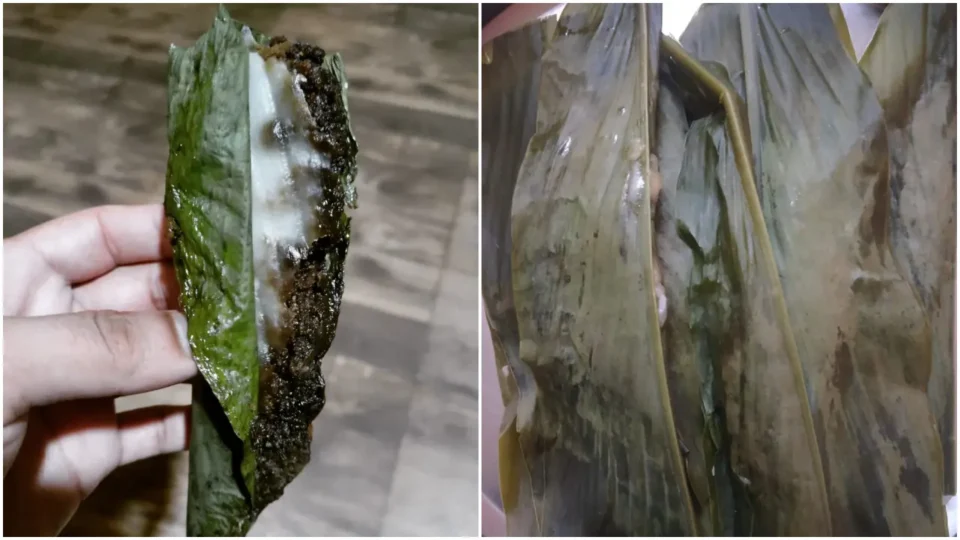
Gavin D’souza has been eating patoleos ever since he was a child. In fact, the Vasaikar knew Independence Day was around when his mother began her preparations to make patoleos. It is a familiar experience for most Catholics, as the sweet smell of jaggery and coconut wafts through the entire home the day before, followed by the whistle of the pressure cooker. Yet, the temptation to sneak into the kitchen for a spoonful of the mixture before the magic happens is hard to resist.
“I remember rushing home from the flag-hoisting ceremony at school every August 15, only to devour a serving or two of freshly steamed patoleos, with a generous topping of honey. As it was also the feast day, Mummy wouldn’t shout at me,” he chuckles.
The Mangalorean’s love for the dish is so strong that, despite the tedious preparation, he tries to coax his mother into making the delicacy and is sure she will do it for him because there is no better feeling than enjoying the sweet juicy treat on the day.
“August 15 is incomplete for me without patoleos,” he adds, while also hoping to learn to make it himself in the near future.
SEE PHOTOS: Patoleo: 5 fascinating facts about this seasonal delicacy Catholics make for August 15
Celebrating Independence Day and a Catholic feast
D’souza, 31, is among many Mumbaikars who celebrate Independence Day every August 15. However, being a part of the Catholic community, there is more to celebrate with the Feast of the Assumption of Mary, which coincides with the national holiday. In Christianity, the day marks the belief that God took the body and soul of the Virgin Mary into heaven at the time of her death. While most people attend church service, many of them are excited for a specific treat.
While the Goans and Mangaloreans call it patoleos, the East Indians call it panmoris – a deliciously sweet dish made of a mixture of jaggery and coconut, wrapped in rice paste and steamed in turmeric leaves. Interestingly, the dish is a combination of seasonal and cultural traditions that gives many the opportunity to enjoy it on the day and the rest of August, too, owing to the availability of the leaves during the monsoon season. While Goans make use of black jaggery that is popularly found in Goa, Mangaloreans and East Indians make use of the jaggery found in the city.
D’souza is married to an East Indian, who loves cooking and even has her own YouTube channel that documents recipes which are not only her own experiments but also those of her mother, and that’s why they hope to document this dish too.
“My wife Neha Britto and I are very interested in learning how to make the dish, simply so that we can carry the tradition forward. Such dishes bring with them a sense of history and belonging. They make you feel responsible for keeping that history alive and taking it forward, and that’s a great feeling,” says D’souza.
The Mumbaikar adds, “When you come across more people who carry the same traditions forward, it’s an instant icebreaker. These dishes not only bring people in the same community closer but also bring other communities closer. To share dishes that span across communities and cultures is truly one of the greatest blessings of diversity that we get to experience in India.”
Even as the dish is made across the western coast of India, D’souza says he and his wife in fact look forward to it.
“As it’s made only once a year, there’s a sense of anticipation around it. I feel the exclusivity makes it even tastier,” he adds.
Continuing tradition with patoleos
The delicacy is no different for Natasha Almeida, who reminisces that some of her fondest memories are of everyone coming home and saying, “Mumma has sent patole for you all”.
She explains, “In the East Indian community, they are commonly called Panmoris or Patole. Just as Christmas sweets or Easter eggs are exchanged, Patole are also shared between families, neighbours, and friends. It’s as much about the act of giving and sharing as it is about eating them.”
Just like her childhood, the Vasaikar says, “The day practically begins with hogging on Patole then you head for morning Mass, come back home and have more Patole, followed by lunch, and of course, even more Patole! It really is an entire day of eating and celebrating around them.”
While many eat it only on August 15, for others such as Almeida, the month is all about the dish. She explains, “The turmeric leaves start appearing in the markets in August, and since they are available for most of the month, Patole becomes a weekend ritual at home. We enjoy making and eating them on Sundays for as long as the turmeric leaves are available.”
Over the years, the Almeida family has made the effort to continue this tradition like so many other Catholics who have roots in Goa and Mangalore but have called the city their home for generations. For East Indians, who are among the original inhabitants of the city, it is so much more, especially because there are still so many people who aren’t aware of their existence beyond the borders of the city. Being one of the many who is keeping the community’s traditions alive through its masalas, food, and traditions through Igoreyaa, an East Indian dining experience, she highlights, “Dishes like these are an important part of how food keeps our traditions alive. They are tied to the seasons and to the calendar, and making Patole for a particular occasion is also about coming together and sharing. Families make them in large quantities, send them across to relatives and neighbours, and the dish becomes a way of celebrating the occasion collectively.”
It is also one of the reasons why Almeida’s mother always makes sure Patole is made at home.
“It’s a dessert she absolutely loves, wholeheartedly. So, it’s something that has always been made and enjoyed in our home,” Almeida adds, continuing, “The coconut and jaggery stuffing can be prepared in a large batch and kept ready. Then, as and when the turmeric leaves are available in the market, you can quickly assemble the Patole, steam them, and they’re good to go.”
With just a day to go for the feast observed by followers of Christianity on August 15 the excitement is palpable for Almeida, who says that there is so much more to these traditions when you think about it because it may be made on one day, but the very tradition is what keeps the uniqueness of communities alive.
“These are traditions that are passed down through generations, not only through food, but through the memories created around it. Every year, when Patole is made and exchanged, old memories come rushing back while new ones are created. I look forward to knowing that Aunty Leera (Almeida’s neighbour) will send some over again this year, or that my mom will make them at home. I may not have made the Patole myself, but the ritual of receiving, sharing, and enjoying them keeps those memories alive and gives us new ones every year,” shares Almeida, who gets ready for yet another year of gorging on the sweet treats.
Celebrating the Goan way
For Nikhil Rodrigues, a Goan who has grown up with fond memories in South Mumbai, the tradition goes a step further.
“My mom always makes Allebelle (pancakes) and Vonn, along with Patoleos.”
While there are two other dishes fighting for his attention, the 31-year-old city-based musician has a specific memory associated with the day.
“I remember during my school days my mom would always get up early in the morning and make them for breakfast and pack some for my friends at school too.”
However, the celebrations have changed today because his mother, Maria Estella Rodrigues, has now moved to making Alle Belle for the occasion, to continue the tradition in her own way, because she has found it difficult to get the turmeric leaves over time.
Ask him for the recipe and he is quick to laugh and say, “My mom doesn’t share her recipes like that. It’s classified information, a trade secret, a family DNA and everything.”
However, prod him a little further and his mother actually shares the recipe, but not without sharing her version of the day, even as youngsters wait for the food.
“First we would listen to the mass in the morning, and after coming home, the whole family used to sit and start making Patoleos, and send some to our neighbours and family members.”
Even as the newer generation likes the soft pancakes, a staple in most Goan homes, the matriarch is quick to add, “The new generation likes pancakes, but we will be making Patoleos this time.”
A memory of home
Elsewhere in Bengaluru, Lynn Misquith, a Mangalorean who is proud of her heritage, particularly preserves the experience while she is away from home, especially when she is unable to make it back home in time for the occasion and the season due to work commitments.
She shares, “When the calendar hits August and September, it’s a hint we’d get the aroma during breakfast or tea-time. For us at home, it was about access. Whenever the leaves were available, it was made at home. The leaves used are turmeric or banana leaves. Turmeric just hits right.”
Growing up, the 29-year-old says it was like exchanging soan papdi during Diwali, except it was Patoleos.
She explains, “I remember at the start of the month it would always come from my granny’s place. Followed by my mum making it. Being a Mangalorean, I had the fortune of tasting Patoleos from different households – GSBs (Gaud Saraswat Brahmins) and Shetty’s. Even relatives who travelled to visit us from the outskirts like Kinnigoli, my grandmother’s hometown, (in Karnataka) would get us some. There’s no rocket science with the recipe, but every household has a secret, or maybe it’s just how they were introduced to the dish, adding a dash of extra love to it. I have eaten Patoleos made with raw sonamasuri rice purée as the base or even boiled and raw rice purée as the base. Extra jaggery, with coconut and cardamom, is the best.”
Living away from home, if there is anything that reminds her of Mangalore, it is this very dish for the occasion.
“It is only when you live away from home when you start valuing regional food delicacies the most. There is a ton of sources like YouTube which help us get close to it and make them whenever we crave for the same, However, there are few that come close to home,” adds the communications professional, who has been getting better at making the dish.
“We start valuing traditional regional delicacies that are very seasonal and made for specific festivals only when you live away from home. You pray to all your dead ancestors, manage to procure the ingredients based on what YouTube and Google recipes tell you, and try coming close to it by making it all by yourself,” she concludes.
Recipe to make Patoleos
East Indian Patole/Panmoris by Natasha Almeida
Ingredients:
For the rice flour: 2 cups rice flour A pinch of salt For the filling: 1 whole grated coconut 2 tbsp sugar or jaggery A pinch of cardamom A pinch of nutmeg
Method: 1. Mix the grated coconut, sugar or jaggery, cardamom, and nutmeg together, and keep it aside. 2. Mix the rice flour with salt and water, as required, to make a thick, spreadable paste. 3. Spread the rice flour paste onto fresh turmeric leaves, then add the coconut-jaggery filling.4. Fold the leaves over and steam until cooked. 5. Serve with tea for breakfast or in the evening or eat as dessert after lunch.
Goan Patoleos by Maria Rodrigues
Ingredients: 1 cup boiled rice or as per requirement 1 cup grated coconut or as per requirement 1 block of black jaggery or as per requirement As per requirement cardamom Turmeric leaves as per requirement
Method: 1. Soak boiled rice overnight. Then grind it to thick paste. Add salt. 2. Take grated coconut, add black jaggery and cardamom and mix well. 3. Take turmeric leaves, wash, and dry them. 4. Apply a thin layer of rice paste to the whole turmeric leaf and add the mixture of jaggery, coconut, and cardamom (around 1.5 tbsp in the middle from top to the bottom) and close the leaf and press it so that the mixture of coconut/jaggery does not come out. 5. Steam the Patoleos for 15 minutes and enjoy.
Why Mumbai's Catholic community eats this sweet delicacy on August 15