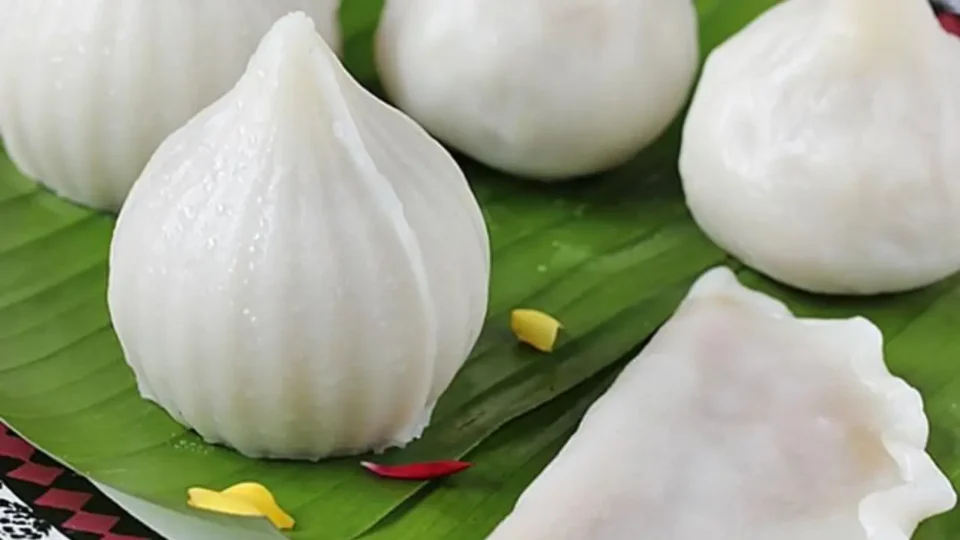
Ganesh Chaturthi marks the beginning of the 11-day Ganeshotsav celebrations, and the festival, which is popular in so many different ways across India, is incomplete without food. While devotion takes centrestage, over time, different regional dishes have also become an important part of the celebrations, going beyond the classic modak.
While North India has its own popular festive dishes, there is much more to explore in South India, where chefs suggest making classic preparations or giving them a contemporary twist.
Millet and Sago Pala Thalikalu
For Vinayaka Chavithi (Ganesh Chaturthi), executive chef Shivaramakrishna at Novotel Vijayawada Varun, says you can make Millet and Sago Pala Thalikalu.
He shares, “I wanted to give the humble Pala Thalikalu a contemporary expression by combining finger millet, foxtail millet, sago, jaggery, and milk, while keeping its traditional soul intact. Traditionally served with warm mudda pappu and melted ghee, the savoury richness of the dal and ghee beautifully complements the sweetness of Pala Thalikalu. This dish is my celebration of Andhra’s culinary heritage, native grains and the festive spirit of Vinayaka Chavithi.”
Ingredients
For Thalikalu dough 50 gm finger millet 50 gm foxtail millet flour 100 gm rice flour 160 – 180 ml hot water 55 ml milk 16 gm sugar 8 gm ghee 1 gm salt
For the milk base 550 gm full-fat milk 50 gm sago 125 gm jaggery 50 gm water for jaggery syrup 1.5 gm cardamom powder 8 gm ghee
To garnish 15 gm cashews10 gm raisins 10 gm dry coconut, sliced 5 gm ghee for frying
Method: 1. Make jaggery syrup first for any payasam recipe as the aroma and taste are much superior to adding the jaggery directly. 2. Secondly, most times, jaggery has debris or even sand. It is easy to get rid of them this way. However, if you still prefer to add it directly, you can skip this section and add grated jaggery directly towards the end. Add grated jaggery and water to a pan. Dissolve the jaggery and cook until it is slightly thick and sticky. No string consistency is required. Set this aside to cool completely. 2. Pour 1/2 cup water and 1/4 cup milk to a pan 3. Next add in 1 tbsp of sugar 4. Also add in 1 tsp ghee. Heat until the sugar dissolves. 5. When the water turns very hot, add the rice flour, finger millet flour, foxtail millet flour and turn off the stove. 6. Mix it well to make a lump-free, smooth, and soft dough. The dough has to be slightly sticky and not tight. If the dough is too tight, the thalikalu will turn hard. If the dough is too sticky you can also add a tbsp of flour. 7. Grease your murukku mould or janthikalu maker 8. Mix 1 tbsp rice flour in 1/4 cup water to make a smooth lump free mixture. 9. Set this aside. 10. Put the dough inside the mould. When you press the mould gently the dough should come out easily without breaking. This indicates the right consistency. 11. Heat ghee in a wide pan. I used a pressure pan. Add cashews and fry until light golden. Then add dried coconut and raisins. When they turn golden, transfer them to a plate. Add coconut and fry. 12. Pour milk into the pot and bring it to a boil. Add soaked sago. When the milk comes to a boil, regulate the flame to medium. Make sure the milk is boiling, then gently squeeze in the dough from the mould. 13. Squeeze up all the dough at once in a circular motion, as my pressure pan was wide enough to hold the entire dough. If you are using a small pan, then they will all clump up together due to less space. 14. Please note: Avoid using a spoon or ladle from here on. Just swirl the milk in the pan when needed to mix. This avoids breaking the pala thalikalu. 15. Do not stir them or disturb them for three minutes. They will break as the dough is still not cooked. After 3 minutes, gently swirl the milk in the pan a few times to disperse the thalikalu evenly. 16. Allow to cook exactly for another 4 to 5 minutes depending on the thickness of the thalikalu. So the total cook time is 7 to 8 minutes. Overcooking can make them hard and dense. 17. Stir the rice flour mixture in the cup with a spoon. Slowly pour it into the pan towards the sides of the pan. Swirl a few times to disperse the rice flour in the milk otherwise lumps can form. Cook until it thickens. Swirl again if needed. Within 1 to 2 mins the mixture turns thick. Do not overcook until it turns too thick; a slight thickness is good enough, as it will thicken further after cooling. 18. Add cardamom powder. Turn off the heat and remove the pan from the stove. If adding grated jaggery, then you can add it and stir until it dissolves. Cooking further may curdle the payasam. 19. Ensure the jaggery syrup is cooled completely. Filter that to the pala thalikalu. Swirl gently as many times as needed until the jaggery is blended well. You can also use a ladle at this stage as the thalikalu firm up. 20. Pour some ghee if desired and add the cashews, coconut and raisins. 21. Cool the pala thalikalu and offer to Ganesha.
Ellu Kozhukattai
If you want to make a South Indian variety of the modak, then Saravanan, who is the executive chef at Sheraton Grand Chennai Resort & Spa, says you can make Ellu Kozhukattai. He shares, “Ellu Kozhukattai is a beautiful reminder that the simplest ingredients can create the most meaningful offerings. The earthy richness of roasted sesame, the warmth of jaggery, and the delicate rice flour shell come together in a sweet that’s deeply rooted in tradition, devotion, and the joy of sharing.”
Ingredients (Serves 8–10)
For the filling 1/2 cup black sesame seeds 1/2 cup powdered jaggery 1/4 tsp cardamom powder (optional)
For the dough 1 cup rice flour 1 and 1/4 cup water 1 tsp sesame oil or ghee A pinch of salt
Method 1. Dry roast the black sesame seeds until aromatic and they begin to splutter. Allow them to cool, then grind coarsely with the jaggery (and cardamom, if using) to make the filling. 2. Bring water, salt, and sesame oil to a boil. Add the rice flour, mix well until it comes together as a soft dough, then cool slightly and knead until smooth. 3. Divide the dough into small portions and shape each into a thin cup. Place a spoonful of the sesame-jaggery filling in the centre. 4. Carefully seal the edges, shaping into a traditional kozhukattai or modak. 5. Steam for 8–10 minutes until the outer layer turns glossy and is cooked through. Serve warm as a festive offering.
Ganesh Chaturthi 2026: Chefs share unique festive recipes from south India